
Puzzly Words - word guess game
SIA FuflaWord
4.61.92K Reviews
- Version
- 10.7.55
- Installs
- 100.00K
- Age Rating
- Everyone
Screenshots

Our Review of Puzzly Words - word guess game
 Analysis by Appyee
I often reach for a word game when I want something more engaging than scrolling but less demanding than starting a long session. Puzzly Words aims at that in-between moment: it turns letter-finding into a quick contest, with the added pressure of playing against other people. That combination can make a familiar vocabulary puzzle feel lively, though it also means the experience depends on whether you enjoy a clock and a competitive pace.
It is a free word game from SIA Fufla, rated for Everyone, and its current version is 10.7.55. The game has a 4.6 average from around 8.6 thousand ratings, with more than 100 thousand installs. Those figures suggest that it has found an audience, but the more useful question is whether its particular style suits how you like to play. I think it works best for people who enjoy spotting words quickly and don’t mind a little pressure.
Reading the board and finding your way around
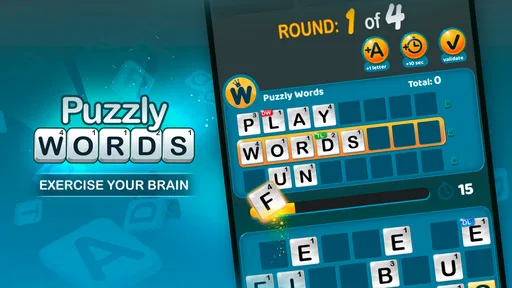
The first thing that struck me about Puzzly Words was its clean, vibrant interface. It's inviting, and you can jump right into the action without any fuss. The game is designed to be intuitive, so you don't need a manual to start playing. As soon as I launched it, I was greeted with cheerful colors and a straightforward tutorial that got me up to speed in no time.
For a word game, clarity matters more than decoration: you need to see the available letters, move your eyes between them and the words you are forming, and keep track of time without losing your train of thought. The simple presentation helps reduce the learning curve. I would still recommend trying a round at a comfortable pace before treating the timer as a test of skill; unfamiliar controls can make anyone feel slower than they really are.
How the timed word rounds feel
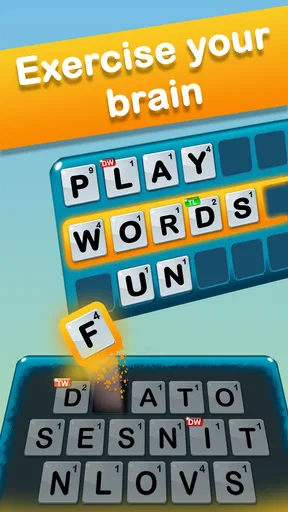
Now, let's dive into the gameplay. The premise is pretty simple: you get a bunch of letters, and your goal is to form as many words as you can within a given timeframe. Sounds easy, right? But here's the catch – you’re playing against others in real-time. The adrenaline kicks in as you scramble to outsmart your opponents by forming longer and more complex words.
The game is structured in rounds, and each round lasts about two minutes. Trust me, these two minutes feel like a blink of an eye when you're deep in thought, trying to remember if "quixotic" is a valid word. The competitive aspect is what keeps me coming back. It’s not just about speed; it’s about strategy, too. You need to decide whether to go for simple words quickly or take your time crafting a longer, high-scoring word.
A useful habit is to scan the letters in more than one way instead of staring at the same promising combination. I try spotting short, familiar words first, then look for a prefix, ending, or less obvious letter pairing that might support a longer entry. That keeps me from spending the whole round chasing one ambitious word. It is a practical trade-off: a steady stream of words can feel safer, while a longer find may be more rewarding if the scoring favors it.
Competition, learning, and repeat play
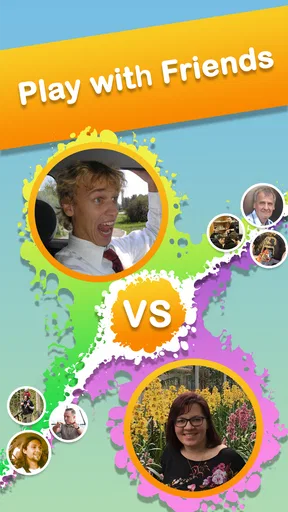
One of the features I absolutely adore is the leaderboard. It adds a sense of achievement when you see your name climbing up the ranks. Plus, there’s something satisfying about knowing you’ve outperformed a hundred other players in a word duel. There’s also a chat feature, which allows for some friendly banter or even a bit of trash talk if that's your style.
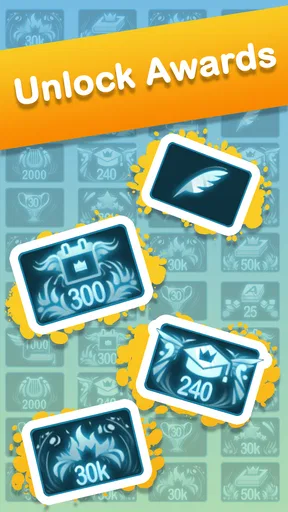
Another cool feature is the daily challenge. It’s a great way to keep things fresh and encourage me to log in every day. Completing these challenges gives you rewards that can be used to unlock new levels or power-ups. Oh, and let's not forget the dictionary option! It’s a lifesaver when you come across words you’ve never heard of. You can expand your vocabulary while having fun, which is a win-win in my book.
The dictionary is most useful when I treat it as a way to learn after a decision, rather than as a reason to interrupt every round. If I stop to investigate every uncertain word, I lose time and the contest’s rhythm. Remembering an unfamiliar word for later—or checking it once play has eased—can turn a close call into something I actually retain. The daily challenge also suits a short routine: it gives a word-focused reason to open the game without requiring me to commit to a long session.
Playing comfortably in different situations
In practice, I’d use this for a coffee break, a short wait, or a quiet moment at home when I can focus on the screen. The rounds are brief enough to fit a small gap, but the real-time contest still asks for attention. If I’m walking, talking with someone, or trying to follow another task, I’d leave it for later rather than split my focus. That distinction matters: short play is not the same as low-attention play.
For players who benefit from extra time to read, process letters, or enter words, a timed contest may feel more demanding than a relaxed word search. The game’s bright, straightforward presentation is a welcome starting point, but comfort can depend on a person’s device, vision, dexterity, and preferred pace. I’d try it in a calm setting first and judge whether the letter display and input feel manageable on my own screen, rather than assuming that a simple interface will suit everyone.
Where it fits among word games
Compared with a solo word search, Puzzly Words puts more weight on quick recall and competition than on patiently scanning a fixed grid. Compared with a crossword, it asks less about clues and general knowledge, and more about rearranging letters under pressure. That makes it a good pick when I want an active, repeatable challenge, but not when I’m looking for a quiet puzzle I can pause and solve at my own pace.
It is also a different kind of vocabulary practice from reading a word list or using a dedicated learning tool. Finding words in a round can prompt curiosity, and the dictionary option can help explain unfamiliar entries, but the main draw is play rather than a structured course. If my priority were systematic language study, I’d pair it with a resource designed around lessons and review; if I wanted a quick contest, this format would make more sense.
Limits worth weighing before you settle in
While I’m a big fan of the game, it’s not without its quirks. Sometimes the matchmaking can take a bit longer than expected, especially during off-peak hours. I found myself waiting longer than I'd like for a match. Also, the ads can be a bit intrusive. I understand the need for them, but they sometimes break my concentration right between rounds.
That interruption is more than a small annoyance if I’m trying to keep a rhythm or fit a round into a narrow break. I’d avoid starting a match when I know I have to leave immediately, and I wouldn’t choose it as a background activity if interruptions frustrate me. The game is free to download, with in-app purchases ranging from $0.99 to $99.99 per item, so I’d approach optional spending deliberately and decide what, if anything, is worth buying for my own play rather than treating purchases as necessary.
Another limitation is the format itself. Real-time competition rewards quick recognition, so a player who prefers careful word-building, has difficulty with rapid touch input, or simply dislikes being compared with others may find the central loop tiring. Chat and leaderboards add social energy for some people, but they are not essential reasons to play; I would not recommend choosing this game solely for a relaxed solo experience.
However, these are minor inconveniences compared to the overall enjoyment the game provides. The developers seem to be actively working on updates, so fingers crossed these issues get smoothed out in future versions.
Who I’d recommend it to
I’d suggest giving it a try if you already enjoy Scrabble-style letter play but want a faster, more competitive change of pace. It can suit someone who likes quick mental challenges, wants a small daily routine, or enjoys comparing progress with other players. The developer, SIA Fufla, has kept the game in a word-focused lane, and that clear premise is its strength: you can understand the appeal without needing a complicated setup.
I’d steer away if you want a completely unhurried puzzle, dislike timed play, or need a game that works well while your attention is elsewhere. It may also be a poor fit if ads between rounds would spoil the experience for you. On Android, the listed minimum requirement is version 5.0, which helps readers with older supported devices decide whether it is worth checking compatibility before installing. The Everyone age rating makes it broadly suitable by rating, while each household can still decide whether competitive play and chat are appropriate for its player.
My take on its inclusive appeal
What I appreciate is that the basic idea is easy to grasp: look at letters and make words. That simplicity can lower the barrier for a newcomer, and a dictionary can make unfamiliar vocabulary less of a dead end. But the timed, real-time format narrows who will feel comfortable. A clear screen does not remove the demands of visual scanning, quick decisions, touch accuracy, or sustained attention, so I see this as accessible in concept rather than universally effortless.
If I were introducing it to a friend with different needs, I’d suggest starting with a low-pressure moment, checking whether the text and letter controls are comfortable to use, and stopping if the timer creates more stress than fun. The game is at its best when the contest feels energizing, not when a player has to fight the interface or rush beyond their preferred pace. That is a more useful test than assuming that one control style or screen presentation will work for everybody.
A lively choice when quick wordplay is the goal
In a nutshell, Puzzly Words is a delightful way to kill some time while keeping your brain engaged. Whether you're waiting for your coffee to brew or need a short break from work, this game is perfect for a quick mental workout. It's competitive, educational, and just plain fun. If you’re someone who loves word games and thrives on a bit of friendly competition, I highly recommend giving it a try. You might just find yourself hooked!
So, grab your phone, download the app, and get ready to flex those linguistic muscles. Who knows? You might just discover you're the wordsmith you always thought you were.
Verdict
Strengths of Puzzly Words - word guess game
- Engaging and challenging word puzzles.
- User-friendly interface with intuitive controls.
- Daily challenges to keep you motivated.
- Multiplayer mode for competitive play.
- Regular updates with new content.
Limitations of Puzzly Words - word guess game
- Ads can be intrusive during gameplay.
- In-app purchases may be costly.
- Limited hints without purchasing.
- Requires internet connection to play.
- Some puzzles can be repetitive.
Other Releases by SIA Fufla
View All
Word Champs
Word4.4
Similar Picks in This Category
View All
Word Search - Word Puzzle Game
Bluetile4.8

Word Search Quest - Puzzles
Blackout Lab4.8

CodyCross: Crossword Puzzles
Fanatee, Inc.4.7

Words of Wonders: Crossword
Fugo Games4.9

Wordscapes: Word puzzle game
PeopleFun4.7

Word Search Explorer
PlaySimple Games4.9
Frequently Asked Questions
What is Puzzly Words and how does it work?
Puzzly Words is a word puzzle game that challenges players to unscramble letters and form words. Each round, players are given a set of letters and must create as many words as possible within a time limit. The game encourages quick thinking and expands vocabulary, making it both fun and educational.
Is Puzzly Words free to play?
Yes, Puzzly Words is free to download and play. However, the game offers in-app purchases for additional features, such as extra hints or ad-free experiences. These purchases are optional and not necessary to enjoy the core gameplay, so players can fully enjoy the game without spending money.
Can I play Puzzly Words offline?
Puzzly Words primarily requires an internet connection to play, especially for features like multiplayer or daily challenges. However, some modes may allow offline play, offering limited interaction. For a full experience, including leaderboard competition and updates, an internet connection is recommended.
Are there multiplayer options available in Puzzly Words?
Yes, Puzzly Words offers a multiplayer mode where you can compete against friends or other players worldwide. This feature adds a competitive edge as you race to form words faster than your opponents, enhancing the social aspect of the game and providing endless replayability.
What age group is Puzzly Words suitable for?
Puzzly Words is suitable for a wide range of ages, typically recommended for ages 8 and up. Its simple mechanics and educational benefits make it great for kids, while the challenging aspects ensure that adults can enjoy it as well. Parental guidance is suggested to manage in-app purchases.
Play our best games!


